
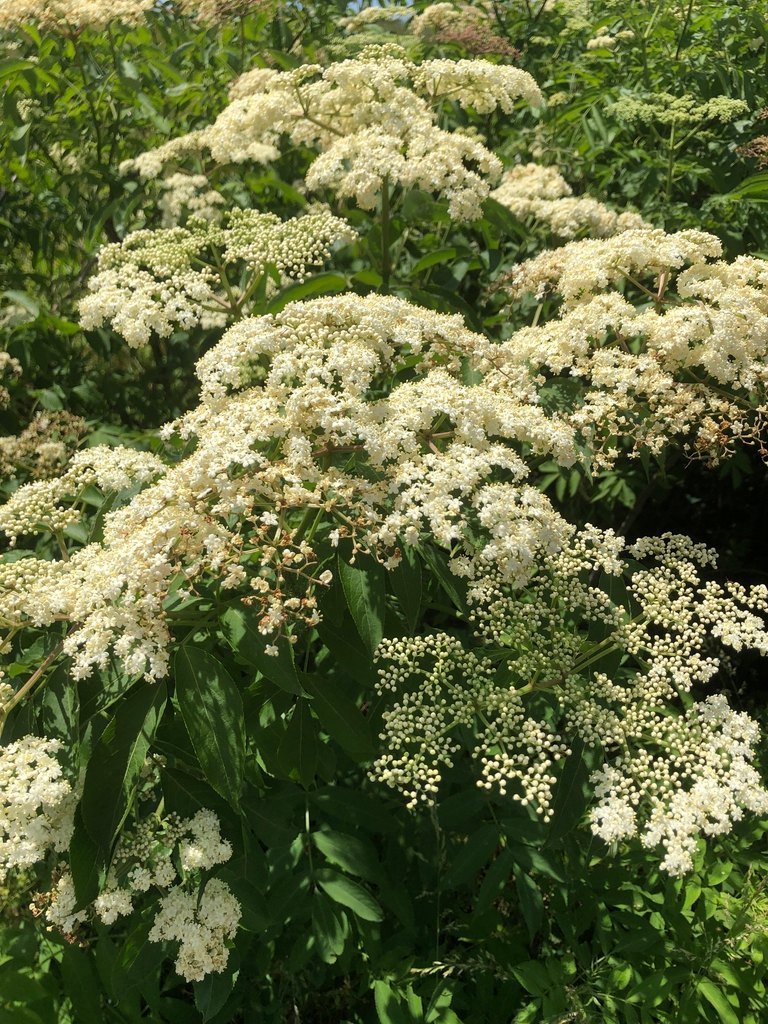
Broad clusters of creamy-white flowers give way to purple-black berries on this spreading native shrub. American elderberry suits a roomy edible landscape or a naturalized garden edge.
Choose from Bob Gordon, Pocahontas, and Adams. Plant different American elderberry cultivars together to support cross-pollination and give developing shrubs consistent moisture.
Plant Details
- Growth habit: Deciduous shrub; spreads by root suckers
- Mature size: Species typically 5–12 ft tall and 6–12 ft wide; cultivar and pruning affect size
- Bloom color: Creamy white
- Harvest season: Late summer into fall; timing varies by cultivar and site
- Light: Full sun to partial shade
- Water: Even moisture; tolerates occasionally wet soil
- Soil: Rich, moist soil with good drainage
- Hardiness: USDA zones 4–8 as a conservative species guide
- Pollination: Plant another American elderberry cultivar nearby for improved fruiting
- Best uses: Edible hedges, wildlife gardens, and moist borders
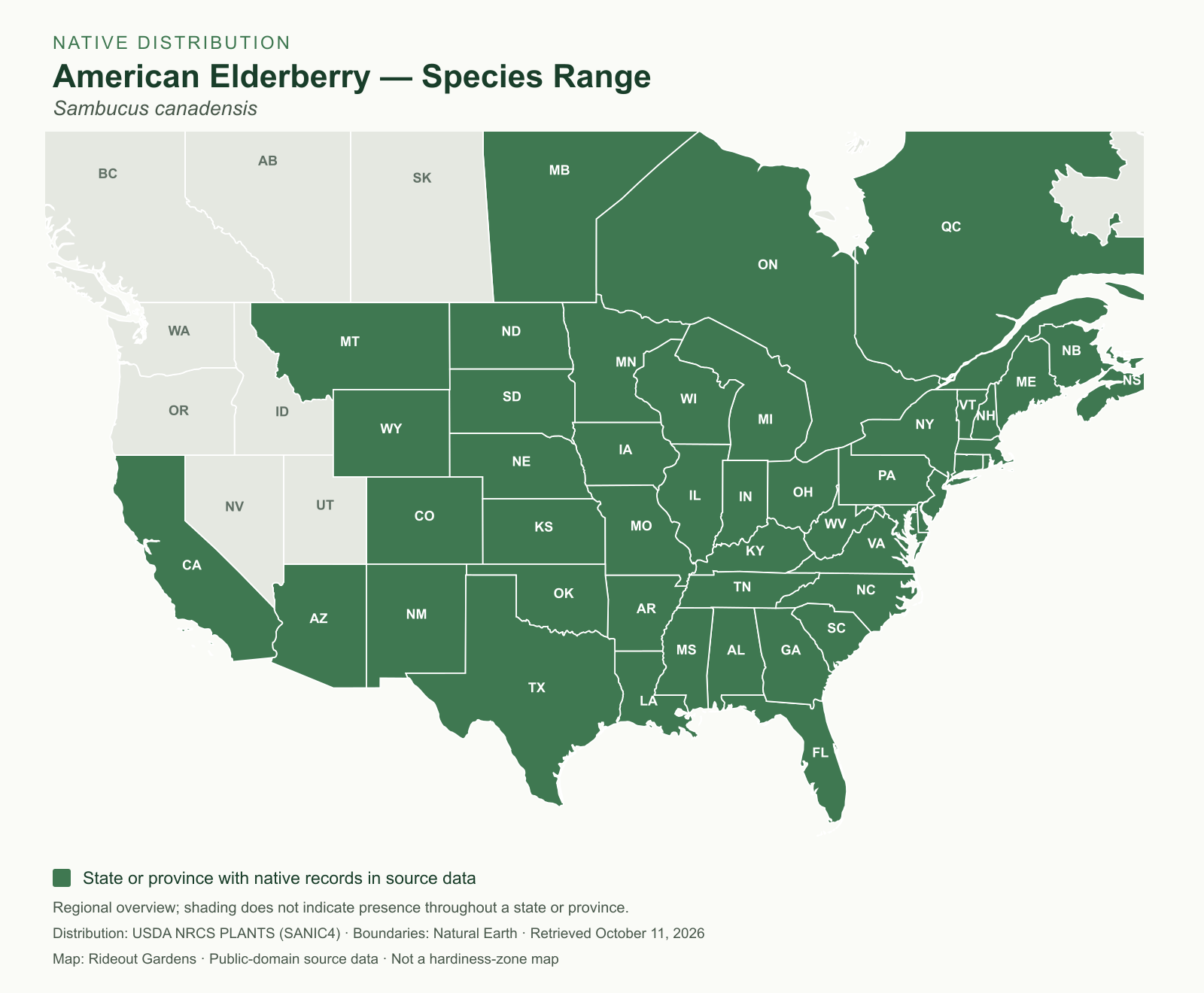
- Native range: Eastern and central North America
- New England status: Species native in all six New England states; cultivated selections are not a claim of local provenance
Choose your variety
Bob Gordon: A vigorous Missouri selection with an open to upright habit and purple fruit.
Pocahontas: An Arkansas selection evaluated by Missouri university researchers, with vigorous upright growth and large fruiting clusters. It ripened a few days after Bob Gordon in those trials.
Adams: Offered under the stock label Adams. Its numbered selection is unconfirmed, so no Adams #1 or #2-specific traits are claimed.
Use properly prepared, cooked ripe berries for food. Do not eat unripe fruit, leaves, or stems. Manage suckers where spread is unwanted.
Plant references: NC State Extension 1 · WVU Extension 2 · Missouri cultivar research 3
Reviews
There are no reviews yet.