
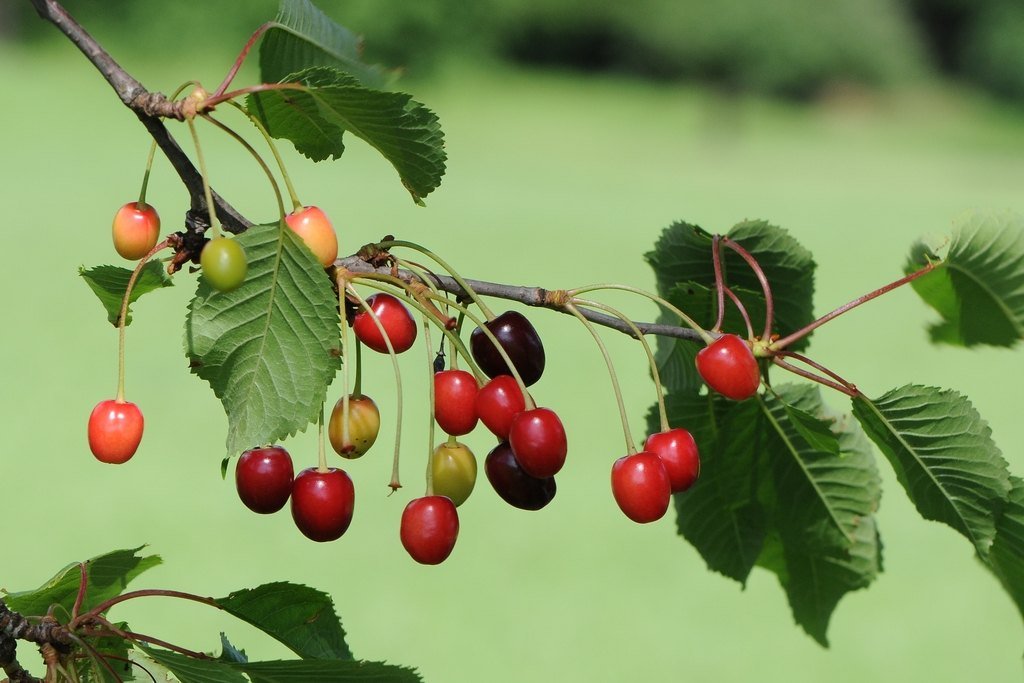
These dwarf sour cherries come from the University of Saskatchewan fruit breeding program. Spring flowers and richly colored fruit make them useful in an edible border as well as a fruit garden.
Choose Cupid for a taller shrub and large, dark fruit, or Cutie Pie for a compact plant. These self-compatible cherries can set fruit without a second variety.
Plant Details
- Growth habit: Deciduous dwarf sour cherry shrub; Prunus breeding hybrids
- Mature size: Cupid: about 8 ft tall; Cutie Pie: about 4 ft tall
- Bloom color: White
- Harvest season: Summer; Cupid generally later than Cutie Pie in breeder trials
- Light: Full sun for best fruiting
- Water: Keep young plants moist; water during dry spells
- Soil: Well-drained loam; avoid waterlogged sites
- Hardiness: Breeder reports cold hardiness to USDA zone 2
- Pollination: Self-compatible; bees transfer pollen
- Best uses: Edible borders, fruit gardens, and shrub-form hedges
- Native range: Cultivated hybrids with European and Asian ancestry
- New England status: These cultivated cherries are not New England native plants
Choose your variety
Cupid: A later-flowering Romance-series selection with large dark-red to nearly black cherries and few suckers. The breeder describes balanced flavor suitable for fresh eating.
Cutie Pie: An unusually compact selection with smaller red cherries. Its tendency to sucker makes it useful for a small fruiting hedge, with spread managed where necessary.
Allow fruit to reach full cultivar-appropriate ripeness before picking. Harvest dates from Saskatchewan trials are comparisons, not a fixed New England calendar.
Representative sour cherry fruit photograph; it does not depict verified Cupid or Cutie Pie plants.
Plant references: University of Saskatchewan 1 · University of Saskatchewan 2
Reviews
There are no reviews yet.